Do you find the air ducts in your building noisy on a daily basis? What starts as a simple annoyance can quickly become a real nuisance and impact your daily life. But before looking at potential solutions to reduce this noise, do you know why air ducts make noise? Vibiscus investigates!
Not all air duct noises sound the same, and each type of noise tends to point toward a specific underlying issue.
Whistling noises are among the most common complaints. They usually appear as a high-pitched, continuous sound, noticeable when the system ramps up. This type of noise often indicates excessive air velocity or restrictions within the ductwork. When air is forced through ducts that are too narrow, poorly designed or partially obstructed, turbulence forms and generates audible frequencies.
Rumbling or low-frequency noise is another frequent issue, particularly in larger HVAC systems. This sound can originate from the fan or blower and propagates through the duct network. Instead of being absorbed, these vibrations travel along rigid duct walls, acting like a resonance chamber. The result is a deep, persistent noise that can be felt as much as heard.
Banging or popping sounds typically occur intermittently when the system starts or stops. These noises are usually linked to thermal expansion. As air temperature changes rapidly, metal ducts expand and contract. If the ductwork lacks sufficient flexibility or proper mounting, the material movement produces sudden and sharp noises.
Rattling noises tend to be more mechanical in nature. They signal loose components, poorly secured duct sections or worn fasteners. Over time, even minor vibrations can loosen elements, leading to repetitive rattling that worsens as airflow increases.
Finally, hissing sounds may indicate air leaks. When pressurized air escapes through joints, seams or poorly sealed connections, it produces a distinct noise. Beyond acoustic discomfort, this issue also reduces energy efficiency and system effectiveness. But all these noises have sources. So, you may wonder why are air ducts making noise?
The root causes of noisy air ducts are often interconnected, involving system design, installation quality, operating conditions and material choices.
One of the primary reasons why air ducts make noise is an excessive air velocity. When a ventilation system is undersized or improperly balanced, it compensates by pushing air at higher speeds. While this may maintain airflow volume, it dramatically increases turbulence. Turbulent airflow interacts with duct walls, bends and fittings, generating noise that travels throughout the building.
Another common cause is a poor duct design. Sharp turns, abrupt transitions, poorly placed dampers or improperly sized branches disrupt smooth airflow. Each disruption becomes a source of pressure fluctuation and sound generation. In well-designed systems, airflow paths are optimized to minimize turbulence and pressure drops.
Mechanical vibrations also play a significant role. Fans, motors and compressors naturally generate vibrations. If these vibrations are not properly isolated, they are transmitted directly into the duct network. Rigid connections, insufficient damping and lack of vibration isolation mounts amplify the problem, allowing structural noise to propagate over long distances.
Inadequate acoustic treatment is another frequent factor. Many duct systems rely solely on basic insulation, which is often insufficient for low-frequency noise or complex acoustic environments. Traditional passive absorbers may struggle to perform effectively across a wide frequency range, particularly in compact or geometrically constrained ductwork.
Finally, air duct noise can stem from pressure imbalances. When dampers are incorrectly set or control systems are poorly calibrated, pressure fluctuations occur. These fluctuations can cause ducts to flex, panels to vibrate or airflow to oscillate, all of which generate sound.
Not always, but it should never be ignored. While some noise may simply indicate minor airflow issues, persistent or worsening sounds often point to inefficiencies, mechanical stress or installation flaws. Left untreated, these issues can lead to higher energy consumption, accelerated wear and reduced system lifespan.
Yes. Noise is often a symptom of airflow imbalance or pressure loss, which directly impacts thermal comfort and air quality. A noisy system may struggle to deliver consistent airflow, leading to uneven temperatures, drafts or poor ventilation effectiveness.
Traditional silencers can reduce certain frequencies, particularly mid to high frequencies. However, they often require significant space and may introduce pressure losses. Their performance can be limited in complex duct geometries or when low-frequency noise is dominant.
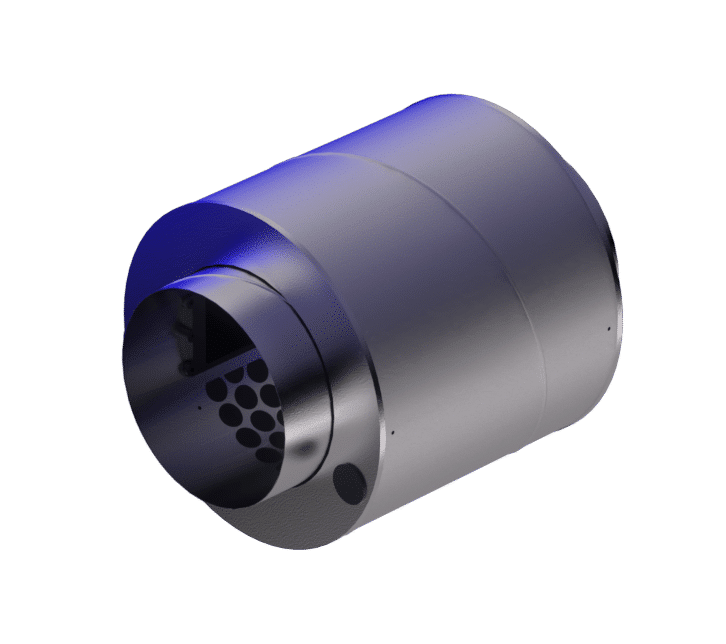
Innovative solutions, such as those developed by Vibiscus, go beyond conventional passive treatments. By combining adaptive materials, embedded sensors and intelligent control, modern systems can dynamically adjust their acoustic properties. This allows them to absorb and dissipate noise more effectively across a wider frequency range, without adding significant airflow resistance.
As expectations around comfort, energy efficiency and acoustic performance continue to rise, ventilation systems must evolve accordingly. Advanced noise control technologies now make it possible to treat air duct noise not as an unavoidable byproduct, but as a design parameter that can be actively managed. In this context, reducing duct noise becomes not just a matter of comfort, but a marker of system quality and engineering excellence! Want to work on reducing duct noise? Discover our innovative technology!