Noise from air ducts is one of the most common problems in modern buildings. When functioning properly, HVAC systems ensure thermal comfort and air quality, but they can also generate noise that’s hard to ignore: whistling, metallic vibrations, continuous humming, or excessive hissing sounds. These disturbances aren’t just a nuisance; they can affect concentration at work, sleep quality in residential settings, patient comfort in the medical sector and even the customer experience in the hospitality industry. So, how can you reduce air duct noise? Vibiscus offers some suggestions in this article.
Before attempting to reduce air duct noise, it’s essential to understand its origin. Several physical and technical phenomena can be responsible.
One of the primary and common sources of noise is the airflow itself. When air moves too quickly through the ducts, it creates acoustic turbulence that generates hissing or whistling sounds. This phenomenon can be exacerbated when the ducts are too narrow, poorly sized, or have sharp angles that disrupt airflow.
The mechanical equipment associated with the HVAC system also contributes to the overall noise. Fans, compressors, and motors create vibrations and structural noise that then propagate throughout the entire system. In some cases, this noise can resonate within the ducts, thus amplifying the perceived noise level in occupied spaces.
Finally, the very properties of the ducts can intensify the problem. Metal walls act like resonating chambers and amplifly acoustic vibrations. An aging installation, poor maintenance or the presence of air leaks can also contribute to a significant increase in noise.
Not all ventilation noise is a cause for concern, but some should raise a red flag. A simple, regular hissing sound can be normal in a properly sized system. However, when a noise becomes too constant, abnormally loud, suddenly more frequent than before or accompanied by structural vibrations, it may indicate a malfunction or a design flaw. It is generally considered that beyond a certain noise level, ventilation is no longer acceptable for comfortable daily use. When the disturbance becomes noticeable and persistent, the question is no longer simply about tolerating the noise, but about finding a reliable and appropriate solution.
And in these circumstances, you are probably wondering how to reduce air duct noise. You might then consider solutions such as Active Noise Cancellation (ANC) or Passive Noise Control (PNC). But Vibiscus offers an innovative approach to go even further.
Traditionally, reducing duct noise involved several strategies. Wall insulation consists of reinforcing the ducts with sound-absorbing materials to limit acoustic transmission. This can be effective but sometimes requires extensive work and is not always efficient in all configurations.
Another approach is the use of conventional acoustic silencers integrated into the network. These attenuate certain types of sound, but their effectiveness depends heavily on the noise frequency, the installation configuration, and the available space. In some existing buildings, their integration can be complex.
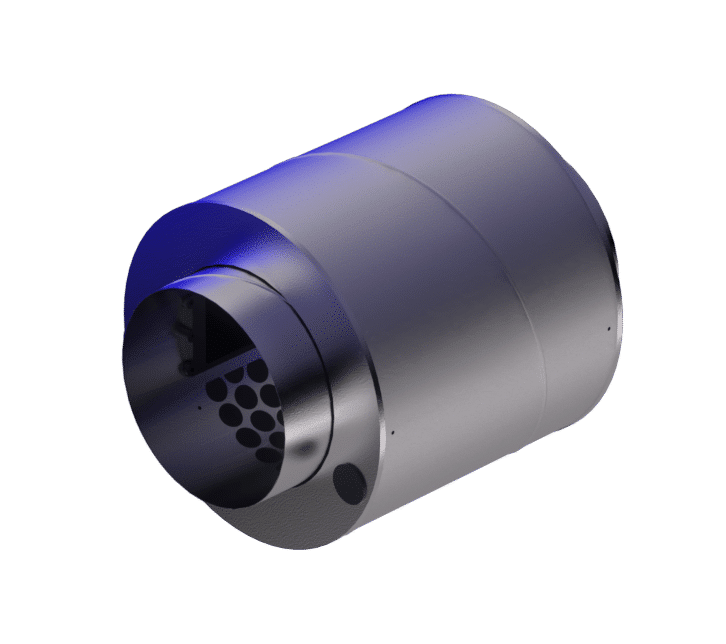
Finally, some solutions rely on Active Noise Control (ANC), which involves generating an opposing sound to neutralize the noise. While scientifically interesting, this process consumes energy and is not always effective in complex environments or when the duct geometry varies. It is precisely in addressing these limitations that Vibiscus technology offers a significant improvement. Rather than masking or simply isolating noise, Vibiscus works at the very heart of the acoustic phenomenon. Our device relies on a network of microphones and movable membranes capable of modifying the acoustic properties of the air circulating in the ducts. This creates a “smart” absorbing surface, able to absorb and dissipate noise before it propagates throughout the building.
This hybrid approach, halfway between traditional passive and active technologies, offers several advantages. It enables precise noise reduction thanks to advanced AI integration, which adapts the system’s behavior to the actual sound characteristics. It can be installed on complex geometries where conventional solutions reach their limits. Most importantly, it does not generate additional sound: it acts as an enhanced material that directly processes noise, without adding unnecessary acoustic energy.
Compact and modular, Vibiscus technology also integrates into existing infrastructures without disrupting the overall architecture of HVAC systems.
Noise itself isn’t necessarily dangerous from a mechanical standpoint, but it can be a symptom of improper sizing or a system malfunction. From a human perspective, it can impact quality of life, concentration and acoustic comfort.
Rarely. Except in very specific cases, persistent ventilation noise requires a technical analysis and a suitable solution. Ignoring the problem often only makes it worse.
Yes, in certain contexts. But they reach their limits in complex configurations, at certain frequencies or when high and stable acoustic performance is required.
Vibiscus doesn’t mask noise: it processes it. Thanks to a unique combination of movable membranes, sensors and embedded intelligence, the technology adapts its absorption capacity to the actual noise encountered. It thus provides a modern, efficient and energy-saving solution to the acoustic challenges of HVAC systems.
So, if you’re wondering how to reduce air duct noise, you could consider traditional solutions like ANC or PNC, and thanks to innovative solutions like Vibiscus, it’s possible to effectively reduce the sounds of your HVAC system without having to overhaul your entire existing setup. Want to learn more? Contact us!