Data centers are silent digital fortresses: places where information flows invisibly and seamlessly. In reality, they are anything but quiet. Behind the rows of servers and network infrastructure lies a complex mechanical ecosystem, where cooling systems, airflow management and electrical equipment generate continuous and sometimes significant noise levels.
As the number of data centers increases and their proximity to urban environments becomes more common, the issue of data centers noise reduction is no longer secondary. It is a technical, environmental and regulatory concern. Operators are now expected not only to ensure performance and uptime, but also to control the acoustic footprint of their facilities. In this order, Vibiscus presents in this article some data center noise reduction solutions.
The acoustic signature of a data center is characterized by continuity. Unlike intermittent industrial noise, data center noise is persistent. It often operates 24 hours a day, with little variation in intensity. This constant exposure is what makes it particularly sensitive, especially when facilities are located near residential or mixed-use areas.
The heart of this noise is the need for thermal management. Servers generate heat, and this heat must be dissipated efficiently to maintain optimal operating conditions. As a result, ventilation systems, cooling units and air-handling equipment run continuously.
The sound produced is typically broadband and combines low-frequency hums from large mechanical systems with higher-frequency components generated by fans and airflow turbulence. This combination can be perceived as intrusive, even when individual noise levels are moderate.
Another characteristic of data center noise is its propagation. Through ductwork, structural elements and open-air cooling installations, sound can travel over significant distances. Outdoor units, such as chillers or cooling towers, can amplify this effect, especially in environments where sound reflection is facilitated by surrounding buildings.
From an operational perspective, noise is not only an external concern. Within the facility itself, excessive noise can affect working conditions for maintenance teams and technical staff. But so, how to prevent data center noise pollution? Discover in this post some noise reduction solutions.
To effectively address noise, it is necessary to identify its sources. In data centers, noise is rarely generated by a single component. Instead, it results from the interaction of multiple systems.
One of the primary contributors is airflow. High volumes of air are moved through ducts, vents and server racks to regulate temperature. This movement creates turbulence, which in turn generates sound. The geometry of the ductwork, the speed of the air and the presence of obstacles all influence the resulting noise levels.
Fans are another significant source. Whether integrated into servers, air handling units or external cooling systems, fans operate at high speeds to ensure sufficient airflow. Their rotation produces both tonal and broadband noise, which can accumulate when multiple units are operating simultaneously.
Mechanical vibrations must also be evaluated. Equipment such as compressors, pumps and cooling units can transmit vibrations through the structure of the building. These vibrations can then be converted into audible noise, particularly if they interact with surfaces that resonate.
In addition, the design of the installation itself can amplify noise. Poorly insulated ducts, rigid connections between components or inadequate acoustic treatment can lead to sound propagation and reflection. In such cases, noise is not only generated but also reinforced by the environment.
Reducing noise in data centers requires a multi-layered approach. There is no single solution that can address all sources simultaneously. Instead, effective noise control involves combining several strategies, each targeting a specific aspect of the problem.
One of the most common approaches is acoustic insulation. By adding absorbent materials to walls, ceilings or duct interiors, it is possible to reduce the propagation of sound. Silencers, or sound attenuators, are also widely used in ventilation systems. Installed within ducts, they reduce noise generated by airflow and fans. Their effectiveness depends on their design, particularly the type of absorbent material used and the geometry of the airflow path.
Another approach involves vibration isolation. By decoupling equipment from the building structure, it is possible to limit the transmission of mechanical vibrations. This can be achieved through the use of mounts, pads or flexible connections.
Active noise control (ANC) systems represent a more advanced solution. They work by generating sound waves that are out of phase with the original noise, effectively canceling it. While effective in certain conditions, ANC systems can be energy-intensive and may be less suitable for complex or large-scale environments. This is precisely where innovative data center noise reduction solutions such as Vibiscus offer a compelling alternative.
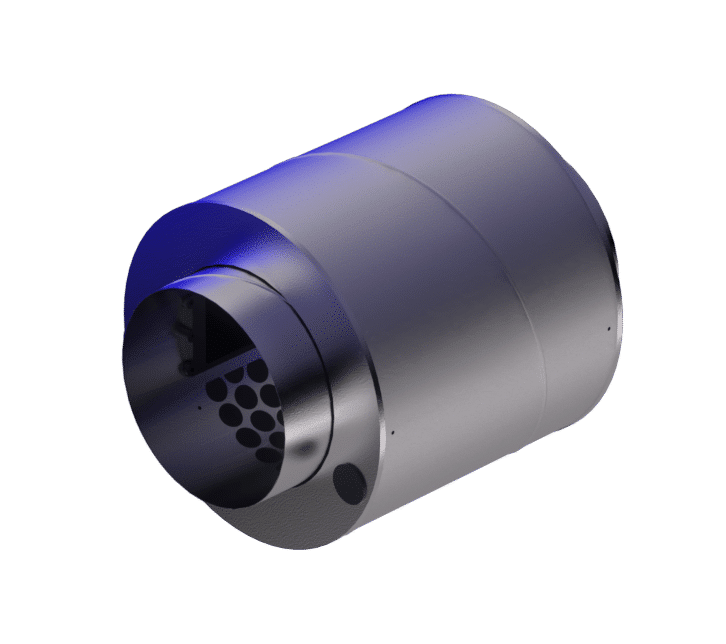
Positioned between passive absorption and active noise control, Vibiscus introduces a new way of addressing acoustic challenges. Instead of adding sound to cancel noise or relying solely on static materials, our system uses a network of microphones and mobile membranes to dynamically modify the acoustic properties of the surrounding air.
The result is a configurable absorbing surface, capable of adapting to changing conditions. As air passes through this surface, noise is absorbed and dissipated more efficiently. This approach is particularly relevant for data centers, where airflow is a central component of system operation.
Because they rely on continuous cooling and airflow systems, which generate persistent sound.
It can be problematic in terms of comfort and environmental impact, especially near residential areas.
It depends on the configuration, but combining insulation, silencers and advanced technologies often yields the best results.
When properly designed, noise control solutions should not compromise system efficiency.
Its ability to dynamically adapt acoustic absorption without adding noise, while integrating seamlessly into existing systems.
Want to know more about the Vibiscus data center noise reduction solution? Discover our products right now.