Industrial cooling systems are indispensable in many sectors, from manufacturing to data infrastructure. In the form of air coolers, chillers or cooling towers, these systems ensure thermal stability and protect equipment from overheating. Yet, their operation often comes with a side effect that is difficult to ignore: noise. For many operators, the question is no longer whether noise is present, but how to control it effectively. Industrial cooler noise can impact working conditions, disrupt surrounding environments and raise compliance issues. So, if you wonder how to reduce industrial cooler noise, don’t miss this post!
Noise pollution generated by industrial coolers
The acoustic footprint of industrial coolers is typically both continuous and wide-ranging. Unlike machines that operate intermittently, cooling systems are designed to run for extended periods, often without interruption. This creates a persistent noise environment, which can become particularly problematic in sensitive areas.
The sound generated by these systems is rarely uniform. It is composed of multiple frequency components, from low-frequency hums to higher-pitched tonal elements. This diversity is what makes cooler noise so noticeable and difficult to attenuate.
In many cases, the dominant source of noise is airflow. Large volumes of air are moved through heat exchangers, ducts and vents to dissipate heat. As this air accelerates and encounters obstacles, it generates turbulence, which in turn produces sound.
Fans are another major contributor. Industrial coolers rely on high-capacity fans to maintain sufficient airflow. Their rotation creates both mechanical noise and aerodynamic noise, which can combine to produce a characteristic acoustic signature.
Mechanical components such as compressors, pumps or motors also play a role. Their operation generates vibrations, which can propagate through the structure of the installation. These vibrations may then radiate as audible noise, especially if they interact with resonant surfaces.
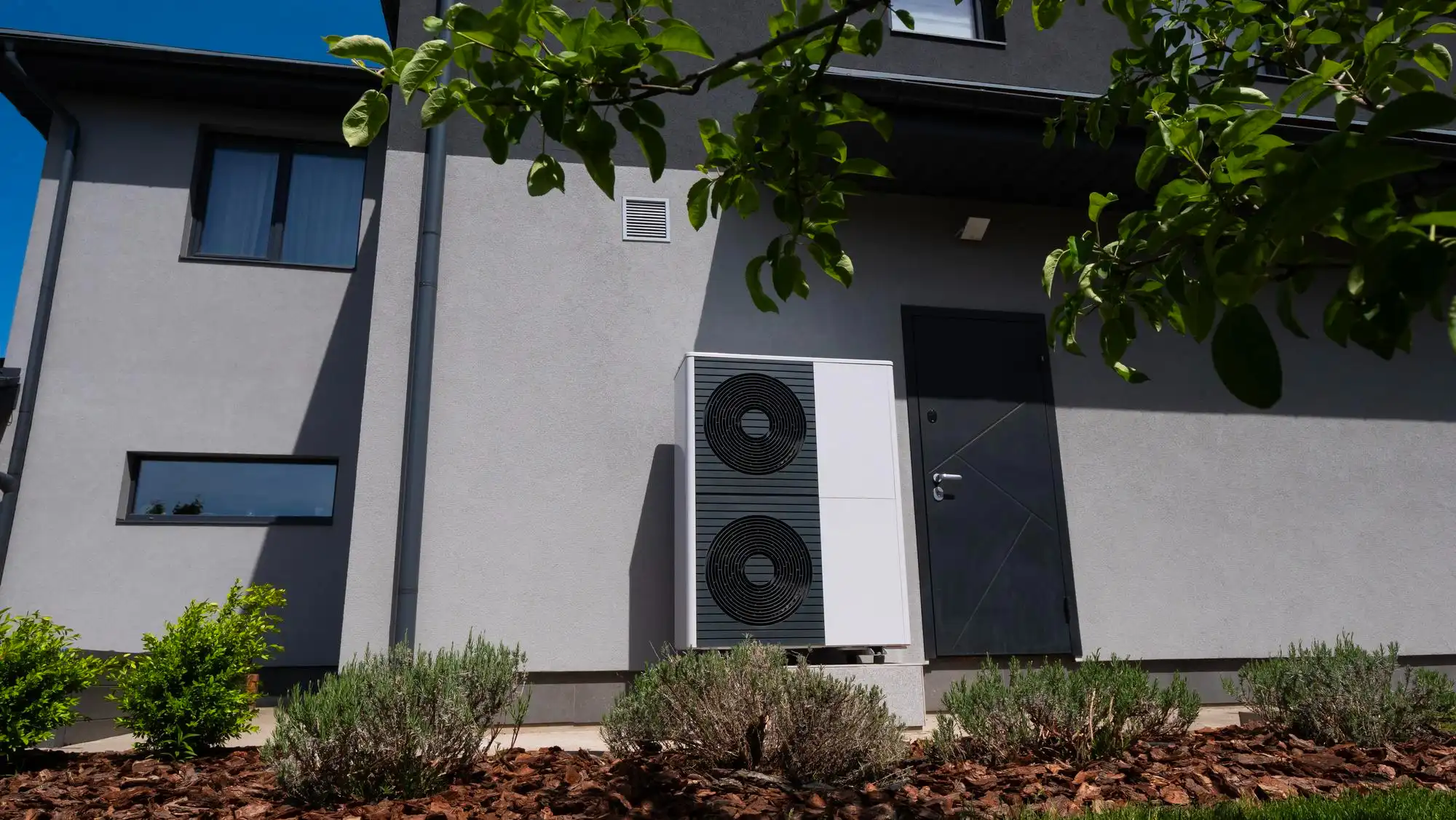
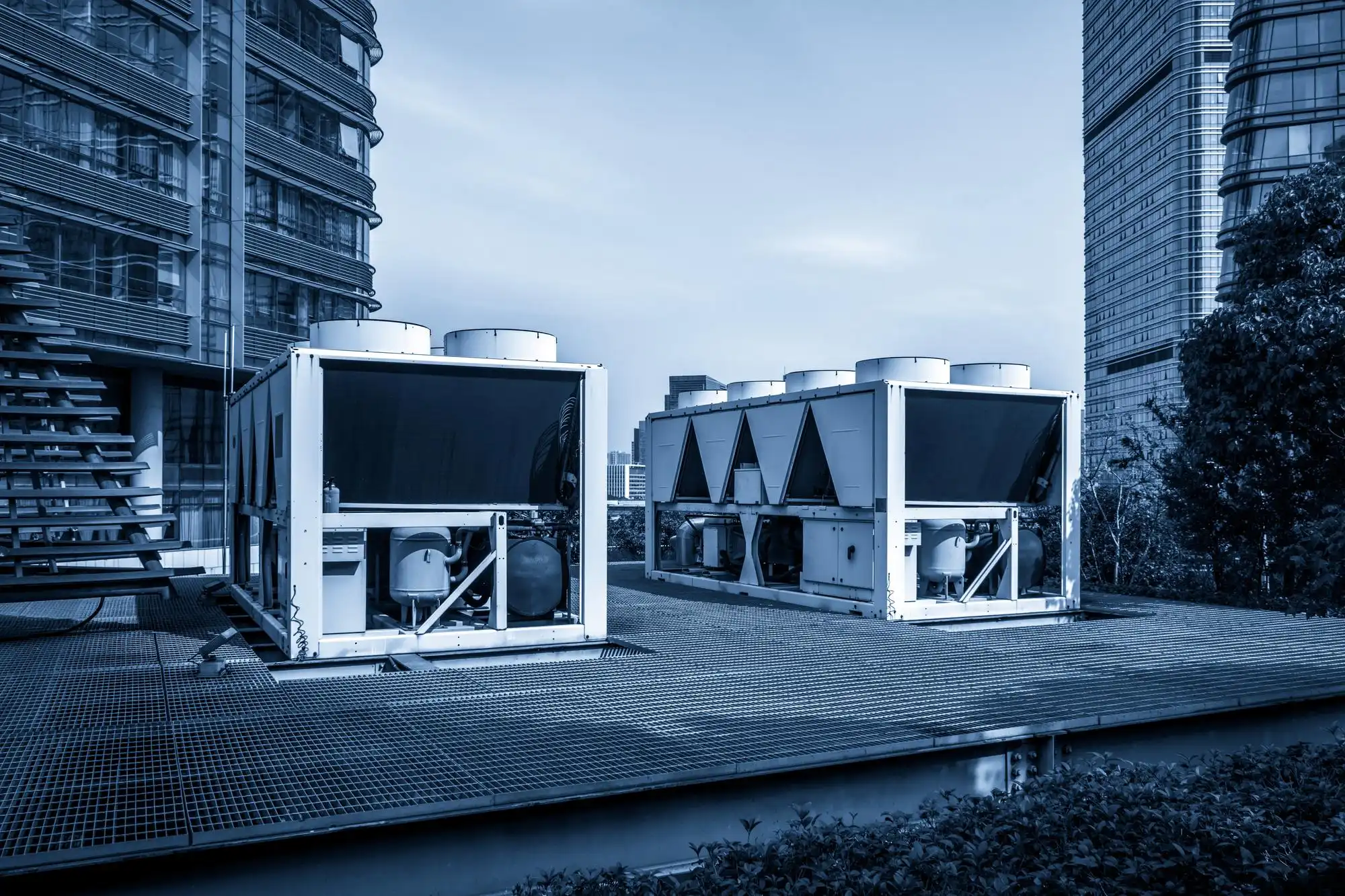
Outdoor installations tend to amplify these effects. When cooling systems are installed on rooftops or in open areas, the absence of barriers allows sound to travel more freely. Environmental factors, such as reflections from nearby buildings, can further influence noise propagation.
For all these reasons, you can wonder how to reduce industrial cooler noise. And here are some solutions.
Commonly used solutions to limit these nuisances
One of the most widely used strategies is acoustic insulation. By applying absorbent materials to enclosures, ducts or surrounding structures, it is possible to limit the spread of sound. These materials work by converting acoustic energy into heat to reduce reflections and overall noise levels.
Another common solution involves the use of silencers, particularly in ventilation systems. Installed within air ducts, these devices are designed to attenuate noise generated by airflow and fans. Their effectiveness depends on their design, including the choice of materials and the configuration of the airflow path.
Vibration isolation is also essential. Mechanical vibrations can be transmitted through mounting structures, amplifying noise in unexpected ways. By using isolators or flexible connections, it is possible to reduce this transmission and improve overall acoustic performance.
In some cases, operators turn to active noise control systems. These technologies generate sound waves that are designed to cancel out the original noise. While effective in certain conditions, they often require precise calibration and can be energy-intensive.
Despite their usefulness, these traditional solutions have limitations. Passive materials may struggle to adapt to changing acoustic conditions, while active systems can be complex to implement in large or irregular environments. This is particularly true for industrial coolers, where airflow patterns and operating conditions can vary significantly.
Discover a new way to reduce industrial cooler noise with Vibiscus
As industrial environments become more demanding, there is a growing need for solutions that combine efficiency, adaptability and ease of integration. This is precisely the approach taken by Vibiscus.
Rather than relying solely on static absorption or sound cancellation, Vibiscus introduces a dynamic method of noise reduction for industrial coolers. Our technology is based on a network of microphones and mobile membranes that interact with the surrounding air.
This configuration allows the system to modify the acoustic properties of the airflow itself. In practical terms, it creates an adaptive absorbing surface, capable of responding to real-time conditions. As air passes through this surface, noise is absorbed and dissipated more effectively than with traditional materials.
One of the key advantages of this approach is its flexibility. Industrial coolers often operate under varying loads, which means that noise levels can fluctuate. A static solution may not perform optimally under all conditions. In contrast, a dynamic system can adjust its behavior to maintain consistent performance.
The compact and modular design of Vibiscus technology also facilitates integration. It can be installed directly within existing ventilation ducts, without requiring extensive modifications to the infrastructure. This is particularly valuable in retrofit scenarios, where space and accessibility may be limited.
Another important aspect is energy efficiency. Unlike active noise control systems, Vibiscus does not introduce additional sound into the environment. Instead, it focuses on absorption and dissipation, reducing energy consumption while maintaining high performance.
The integration of artificial intelligence further enhances the system’s capabilities. By analyzing acoustic data in real time, it can fine-tune its response to ensure precise noise reduction.
Beyond noise control, this technology also contributes to improved airflow management. By optimizing how air moves through the system, it supports both acoustic performance and overall operational efficiency.
Frequently asked questions
Because they rely on high airflow rates, powerful fans and mechanical components that operate continuously.
Not entirely, but it can be significantly reduced with the right combination of solutions.
They can be effective, but may struggle to adapt to changing conditions in dynamic environments.
Its ability to dynamically adapt to acoustic conditions without adding noise, while integrating easily into existing systems.
When properly designed, it should not compromise performance and can even improve overall system efficiency.
Want to know more about our solution to reduce industrial cooler noise ? Discover our technology right now !